Dentalium: 5 Facts About the Ancient Currency
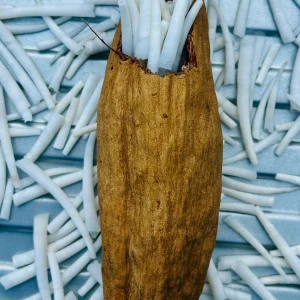
Long before paper bills, gold coins, or digital transactions, global societies used the treasures of the natural world to conduct trade. Among the most successful, durable, and sophisticated of these ancient currencies was the dentalium shell.
These hollow, tooth-like marine structures were far more than just pretty ornaments—they were the backbone of a complex economic network. Here are 5 fast facts that explain how a simple deep-sea shell became the ancient world’s ultimate currency.
1. It Was the Ultimate “Deep-Sea” Mint
Unlike gold, which had to be mined from the earth, dentalium was harvested from the depths of the ocean. The living organisms (known as scaphopods or “tusk shells”) lived buried in the deep, sandy ocean floor, primarily along the Pacific Northwest coast of North America. Because they were incredibly difficult to harvest—requiring long, weighted cedar rakes lowered from canoes—their supply was naturally limited. This scarcity gave them an intrinsic high value, much like precious metals today.
2. Length Strictly Determined Its Value
The dentalium economy had a highly standardized system of valuation based entirely on size. Just as a $100 bill is worth more than a $1 bill, a longer dentalium shell was worth significantly more than a short one. Standardized measurements were often tattooed onto the forearms of traders to quickly judge the length of a shell string. A single string of exceptionally long, flawless shells could buy high-value assets, such as canoes, ocean-front land, or freedom.
3. It Created a Vast Pre-Colonial Trade Highway
Though dentalium was harvested in the cold waters of the Pacific Northwest by coastal nations like the Nuu-chah-nulth, it didn’t stay there. Through extensive intertribal trade networks, these tiny shells traveled thousands of miles inland. They crossed the Rocky Mountains and reached the Great Plains, the Midwest, and even parts of the subarctic. Finding dentalium shells in ancient archaeological sites thousands of miles from the nearest ocean proves just how far this currency traveled.
4. It Was a Visual Display of Wealth and Status
Dentalium was a unique currency because you didn’t just store it in a pouch—you wore it. The wealthy elite wove these shells into elaborate ceremonial regalia, including heavy capes, headpieces, and long dangling earrings. Wearing your wealth served as an immediate indicator of your social standing, political influence, and financial success within the community.
5. It Resisted Inflation and Wear for Centuries
A good currency needs to be durable, portable, and impossible to counterfeit. Dentalium fit the bill perfectly. Their naturally hollow shape made them incredibly easy to string together onto leather or sinew for easy transport. Furthermore, their tough, calcium-carbonate composition meant they didn’t easily crack, rot, or degrade, allowing individual shells to circulate as active currency for generations without losing their physical integrity.
Conclusion
The story of dentalium proves that the core principles of economics—scarcity, demand, utility, and standardization—are ancient concepts deeply rooted in human history. These elegant tusk shells managed to unite diverse cultures across vast geographic distances, serving as a peaceful tool for commerce and cultural connection.
Whether you are a history enthusiast or a jewelry designer looking to connect with the deep roots of this material, working with these shells connects you directly to a rich, historic legacy. Explore our ethically sourced selection and buy authentic dentalium sea shells at dentaliumseashells.com to add a piece of ancient economic history to your modern collection.